
Have you ever tasted the essence of a tropical getaway in cake form? My Moist Two-Layer Coconut Cake with Cream Cheese Frosting brings the beach to your kitchen, transforming any gathering into a celebration of flavor. This delightful dessert features tender layers infused with a rich coconut essence, complemented perfectly by a tangy cream cheese frosting. Not only is this cake surprisingly easy to make, but it’s also a guaranteed crowd-pleaser that adds a touch of elegance to any occasion. Whether you’re celebrating a birthday or just indulging in homemade goodness, this recipe promises an unforgettable sweet treat. Ready to dive into this slice of paradise?
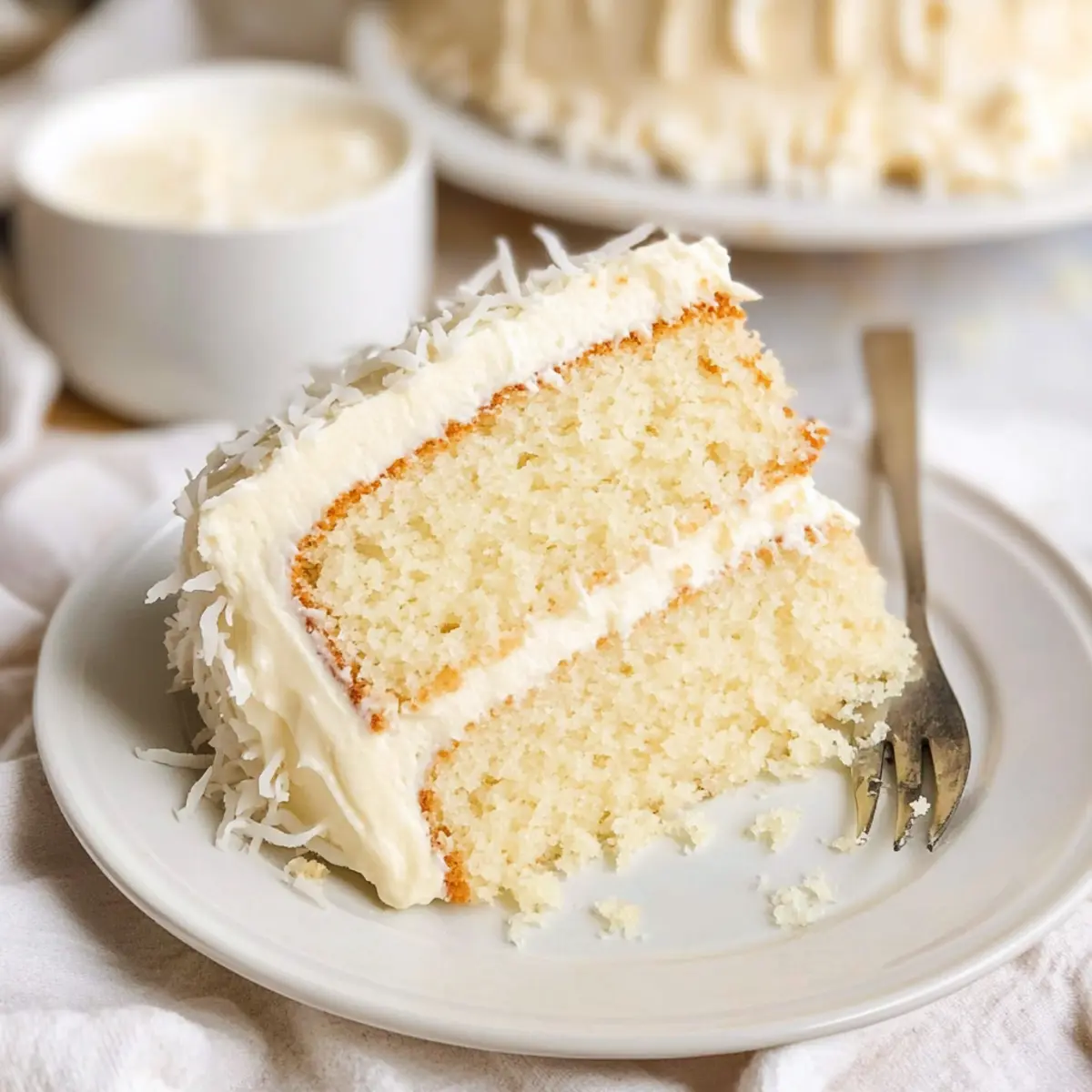
Why is this Coconut Cake so special?
Moisture, this cake is incredibly moist and fluffy, thanks to the combination of full-fat coconut milk and sour cream.
Flavor-packed, every bite bursts with rich coconut flavor, elevating your dessert experience to new heights.
Easy to make, you don’t have to be a pro to whip up this beauty; straightforward steps make it approachable for all home bakers.
Versatile delight, perfect for any occasion, whether it’s a birthday party or a quiet family gathering, this cake always impresses.
Impressive presentation, adorned with a creamy frosting and toasted coconut flakes, it not only tastes divine but looks stunning, too!
Serve it with a side of fresh berries or a scoop of coconut ice cream for the perfect contrast—just like with my Coconut Cream Pancakes or Coconut Shrimp Sweet. Enjoy!
Coconut Cake Ingredients
-
For the Cake
• Unsweetened Shredded Coconut – Adds natural coconut flavor and moisture; substitute with finely grated fresh coconut if desired.
• All-Purpose Flour – Provides structure; can be replaced with a gluten-free flour blend for a gluten-free option.
• Baking Powder – A leavening agent for a light texture; ensure it’s fresh for optimal rise.
• Baking Soda – Works alongside baking powder for maximum fluffiness; check the expiration date before use.
• Salt – Enhances sweetness and flavor balance.
• Butter (room temperature) – Adds richness and moisture to the cake.
• Granulated Sugar – Sweetens and contributes to the cake’s softness; consider using coconut sugar for a unique flavor.
• Large Eggs (room temperature) – Essential for structure and moisture; helps cakes rise evenly.
• Sour Cream – Contributes fat and moisture for a tender crumb; Greek yogurt can also be used as a substitute.
• Full-Fat Coconut Milk – Introduces a rich coconut flavor and moisture; regular milk can be used, but it will change the flavor profile.
• Vegetable Oil – Keeps the cake moist; can substitute with melted coconut oil for an added coconut touch.
• Vanilla Extract – Enhances the overall flavor profile.
• Coconut Extract (optional) – Boosts coconut flavor; omit if unavailable. -
For the Frosting
• Butter (for frosting) – Provides a creamy texture and flavor to the frosting.
• Cream Cheese – Adds delightful tanginess to the frosting; reduce to half for a less tangy buttercream.
• Powdered Sugar – Sweetens and thickens the frosting; sifting ensures a smooth texture.
• Coconut Milk (for frosting) – Contributes to a creamy consistency; substitute with heavy cream for an even richer frosting.
• Coconut Extract & Vanilla Bean Paste – Flavor enhancers that complement the frosting beautifully. -
For Decoration
• Coconut Flakes – Adds aesthetic appeal and a delightful texture to your beautifully frosted Coconut Cake.
This mouthwatering Coconut Cake promises to whisk you away to a tropical paradise with every delectable slice!
Step‑by‑Step Instructions for Moist Two-Layer Coconut Cake with Cream Cheese Frosting
Step 1: Preheat the Oven
Start by preheating your oven to 170ºC (340ºF). While it’s warming up, line two 20 cm (8 inches) round baking pans with parchment paper, ensuring the pans are ready for the batter. This step is crucial for achieving that perfect golden crust on your Coconut Cake!
Step 2: Prepare the Dry Ingredients
Blend the unsweetened shredded coconut in a food processor until it resembles a flour-like texture. Sift this coconut with all-purpose flour, baking powder, baking soda, and salt in a mixing bowl. This blend helps ensure your dry ingredients are well incorporated and airy, setting the foundation for a light and fluffy Coconut Cake.
Step 3: Cream the Butter and Sugar
In a large mixing bowl, beat the room-temperature butter and granulated sugar together until the mixture is light and fluffy, about 3-5 minutes. This step introduces air into the batter, contributing to the cake’s moisture and tenderness. Look for a pale yellow color and a creamy texture as signs you’re on the right track.
Step 4: Add the Eggs
Crack in the large eggs one at a time into the butter-sugar mixture, mixing well after each addition. Make sure the eggs are also at room temperature for better incorporation. After adding all eggs, you should have a smooth, homogenous mix that just beckons to be transformed into a Coconut Cake.
Step 5: Combine the Ingredients
Gradually add half of the sifted dry mixture into the bowl, gently mixing until just combined. Next, pour in the sour cream, full-fat coconut milk, vegetable oil, and your extracts. Don’t rush this step; mix until everything is smooth and blended, as this adds moisture and flavor that elevates the Coconut Cake.
Step 6: Finalize the Batter
Continue by gently folding in the remaining dry mixture, being careful not to overmix to keep your Coconut Cake light. Use a spatula for this task, ensuring large clumps disappear while maintaining the cake’s airy texture. The batter should be thick yet pourable, ready to be divided into the prepared pans.
Step 7: Bake the Cake
Pour the prepared batter evenly into the lined baking pans. Bake in the preheated oven for 20-23 minutes or until a toothpick inserted in the center comes out clean. Keep an eye on the cakes as they bake; a golden top signifies a deliciously moist Coconut Cake that is about to emerge from the oven.
Step 8: Make the Frosting
While the cakes cool, prepare the cream cheese frosting. In a mixing bowl, cream the room-temperature butter until smooth, then add cream cheese, coconut milk, and extracts. Gradually incorporate the sifted powdered sugar until the frosting is silky and spreadable, perfect for layering on your Coconut Cake.
Step 9: Frost and Decorate
Once the cake layers are completely cool, place one layer on a serving plate and spread a generous amount of frosting on top. Stack the second layer on and apply a crumb coat—this thin layer of frosting helps seal in crumbs. Chill briefly, then frost the top and sides, decorating with coconut flakes for that beautiful finishing touch. Your Moist Coconut Cake is now ready to shine!
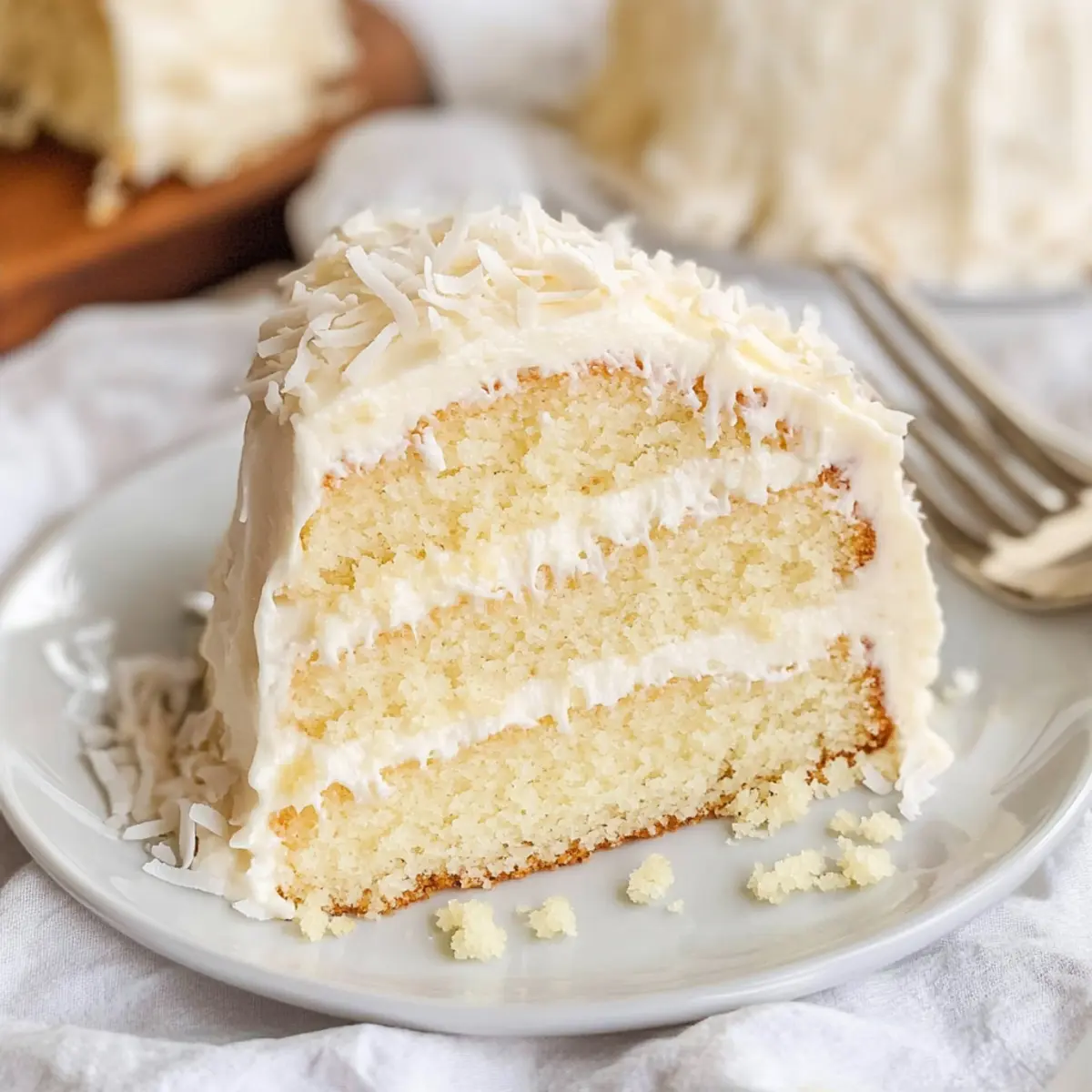
Coconut Cake Variations & Substitutions
Feel free to take this Coconut Cake on a delicious adventure by customizing it with these exciting variations!
- Gluten-Free: Substitute all-purpose flour with a 1:1 gluten-free flour blend for a tasty, gluten-free treat.
- Chocolate Coconut Delight: Add 1/2 cup cocoa powder or fold in chocolate chips for a rich, chocolaty twist.
- Tropical Fruit Fusion: Incorporate chopped pineapple or mango into the cake batter for a fruity touch that enhances the tropical vibe.
- Lemon Zing: Zest a lemon and add a squeeze of fresh lemon juice to the batter for a bright, citrusy note.
- Nutty Crunch: Fold in chopped nuts like pecans or walnuts for a delightful texture that contrasts with the fluffiness of the cake.
- Dairy-Free Option: Replace butter with coconut oil and use dairy-free cream cheese for a scrumptious dairy-free frosting.
- Spice it Up: Add a teaspoon of cinnamon or cardamom to the dry mix for a warm, aromatic flavor.
- Decadent Frosting 2.0: Swirl in some melted chocolate into your cream cheese frosting for an irresistible chocolate-coconut duo that melts in your mouth!
Try any of these variations and elevate your Coconut Cake experience! And if you’re looking for more coconut-inspired recipes, check out my Coconut Cream Pancakes or indulge in some flavorful Coconut Shrimp Sweet. Happy baking!
What to Serve with Moist Two-Layer Coconut Cake
Treat your taste buds to a delightful feast with complementary flavors that elevate this tropical delight.
-
Fresh Berries: Strawberries or raspberries add a bright contrast that balances the richness of the cake.
-
Coconut Ice Cream: The creaminess intensifies the coconut flavor, making it a refreshing and indulgent pairing.
-
Tropical Fruit Salad: A mix of pineapple, mango, and kiwi offers vibrant colors and refreshing sweetness that harmonizes beautifully.
-
Vanilla Whipped Cream: Light and airy, this classic pairing brings a creamy touch that enhances the luscious frosting.
-
Sparkling Wine: A crisp, fruity sparkling wine or champagne provides a festive touch, making each bite feel like a celebration.
-
Chocolate Truffles: Decadent chocolate balances the sweetness of the cake, creating a delightful contrast that will leave guests wanting more.
-
Coconut Macaroons: Double the coconut joy! These chewy treats enhance the flavor experience while offering a fun texture twist.
Whether you’re hosting a party or simply indulging in a sweet moment at home, these additions will transform your dessert into a joyful gathering!
Expert Tips for Coconut Cake
-
Room Temperature Ingredients: Ensure all your ingredients, especially butter and eggs, are at room temperature. This helps them combine better for a moist Coconut Cake.
-
Gentle Mixing: Use a spatula to fold the batter gently. Overmixing can lead to a tough cake texture, so keep it light and airy!
-
Test for Doneness: Insert a toothpick into the center of the cake; it should come out clean. This simple trick ensures your Coconut Cake is perfectly baked!
-
Avoid Greasy Frosting: If your cream cheese frosting gets too soft, refrigerate it for a bit to thicken before frosting the cake.
-
Decorate Thoughtfully: When decorating with coconut flakes, toast them beforehand for added flavor and a beautiful golden appeal.
-
Storage Tips: Store any leftover Coconut Cake in an airtight container in the fridge for up to 2 days to keep it moist and delicious!
How to Store and Freeze Coconut Cake
-
Fridge: Keep your Coconut Cake covered in an airtight container in the fridge for up to 2 days. This helps retain its moisture while keeping it fresh and delicious.
-
Freezer: If you have un-frosted layers, wrap each one tightly in plastic wrap and aluminum foil, then freeze for up to 3 months. Thaw them at room temperature before frosting for best results.
-
Reheating: If you enjoy your cake warm, you can microwave a slice for about 10-15 seconds. This will enhance the moistness and bring out that delightful coconut flavor!
-
Frosting Storage: If you have leftover cream cheese frosting, store it in a sealed container in the fridge for up to 1 week. Just give it a good stir before using it again!
Make Ahead Options
This Moist Two-Layer Coconut Cake is a dream for busy home cooks looking to save time during the week! You can prepare the cake layers up to 24 hours in advance; simply cool them completely, wrap in plastic wrap, and refrigerate to maintain moistness. For the frosting, you can make it up to 3 days ahead—store it in an airtight container in the fridge. When it’s time to serve, allow both the cake layers and frosting to come to room temperature before frosting the cake. This way, you’ll enjoy the same delightful flavors and textures while cutting down on last-minute kitchen chaos!
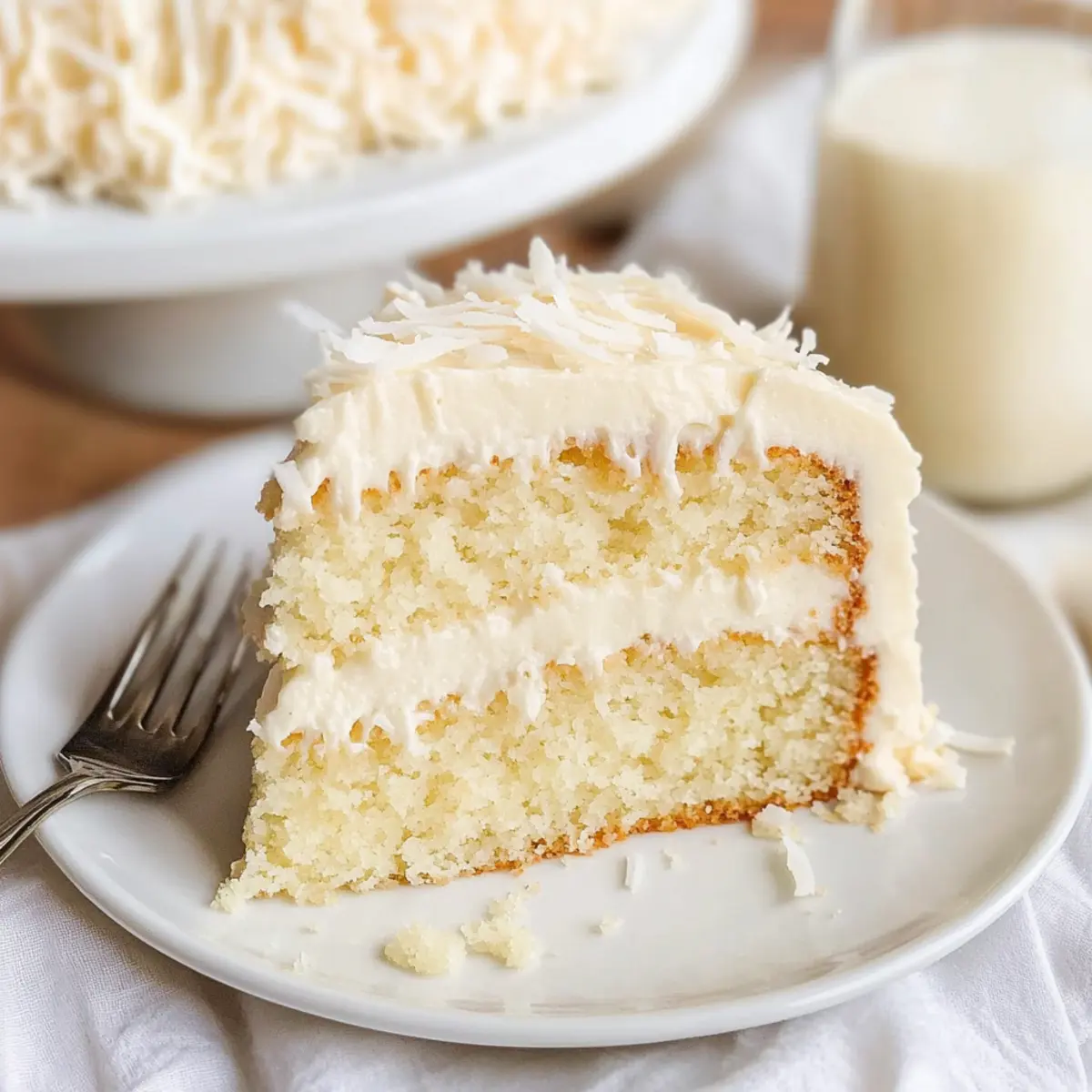
Coconut Cake Recipe FAQs
What type of coconut should I use for the best results?
For the best flavor and moisture, I recommend using unsweetened shredded coconut. It brings a natural coconut essence to your cake. If you prefer, you can substitute it with finely grated fresh coconut, though be prepared for a different texture and flavor.
How should I store my Coconut Cake?
Store your Coconut Cake in an airtight container in the fridge for up to 2 days. This keeps it fresh and preserves its delicious moisture. If you have any leftovers, make sure it’s well covered to avoid drying out!
Can I freeze Coconut Cake?
Absolutely! If you have un-frosted layers, wrap each one tightly in plastic wrap followed by aluminum foil, ensuring there’s no air exposure. You can freeze them for up to 3 months. When you’re ready to enjoy, simply thaw them at room temperature before frosting for the best texture and flavor.
My cake didn’t rise as expected. What went wrong?
There could be a few reasons for this. Make sure your baking powder and baking soda are fresh—they typically have a shelf life of about 6-12 months. Also, ensure you’re not overmixing the batter, as this can lead to a dense cake. If your ingredients aren’t at room temperature, this may also affect the cake’s rise.
Is this Coconut Cake safe for pets or those with allergies?
While the ingredients in this Coconut Cake are safe for human consumption, it’s important to note that it contains sugar and dairy, which are not suitable for pets—especially dogs, as sugar can be harmful to them. For those with allergies, make sure to check if anyone has an egg, dairy, or gluten intolerance before sharing this cake.
How can I customize this Coconut Cake recipe?
The more the merrier with customization! You can substitute half of the all-purpose flour with coconut flour for an intensified coconut flavor. Or, if you’re feeling adventurous, mix in some cocoa powder or chocolate chips for a delightful chocolate-coconut fusion. The flexibility is what makes this Coconut Cake recipe so special!
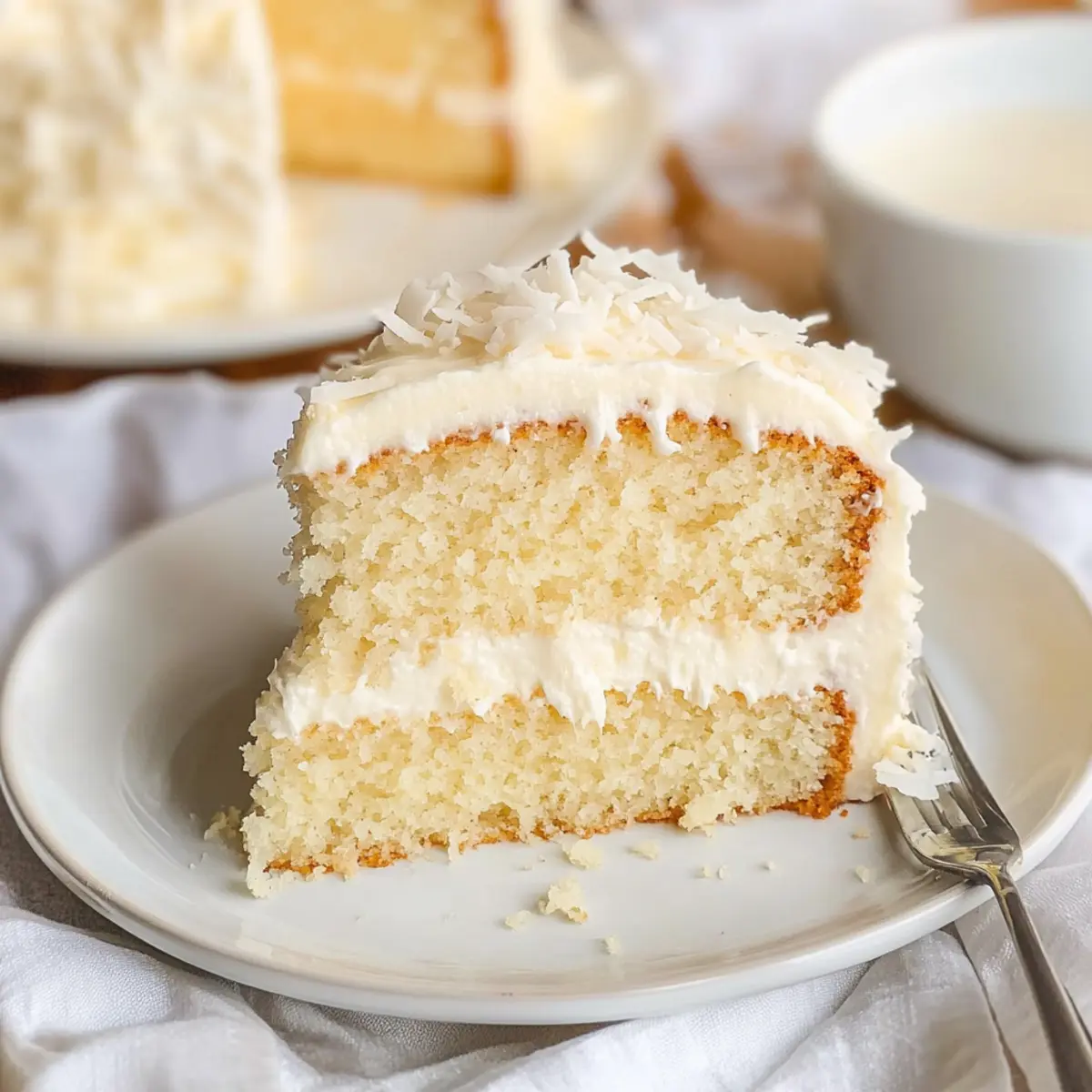
Irresistibly Moist Coconut Cake with Cream Cheese Frosting
Ingredients
Equipment
Method
- Preheat your oven to 170ºC (340ºF) and line two 20 cm (8 inches) round baking pans with parchment paper.
- Blend the shredded coconut in a food processor and sift with flour, baking powder, baking soda, and salt.
- Cream butter and sugar together until light and fluffy, about 3-5 minutes.
- Add eggs one at a time into the butter-sugar mixture, mixing well after each addition.
- Gradually mix in half of the dry ingredients, then add sour cream, coconut milk, oil, and extracts.
- Fold in the remaining dry mixture gently until combined.
- Pour the batter into prepared pans and bake for 20-23 minutes or until a toothpick comes out clean.
- While cakes cool, prepare the frosting by creaming butter, then adding cream cheese, coconut milk, and extracts.
- Layer the frosting between cake layers and decorate the top and sides with coconut flakes.
Leave a Reply