
The tantalizing smell of eggplant sizzling in olive oil instantly transports me to a sun-drenched Mediterranean kitchen. As I layer tender vegetables with savory ground meat and a velvety béchamel, I can’t help but think how this Greek moussaka embodies comfort food at its finest. This recipe is a true showstopper, perfect for those busy weeknights when you crave something hearty yet simple to prepare. Not only will you impress your family and friends with its stunning layers and rich flavors, but it also makes for excellent leftovers, perfect for meal prep. Whether you opt for beef or lamb, this moussaka allows for delicious customization with different cheeses, ensuring a personal touch that will have everyone asking for seconds. Ready to dive into a culinary adventure that celebrates tradition and flavors? Let’s get cooking!
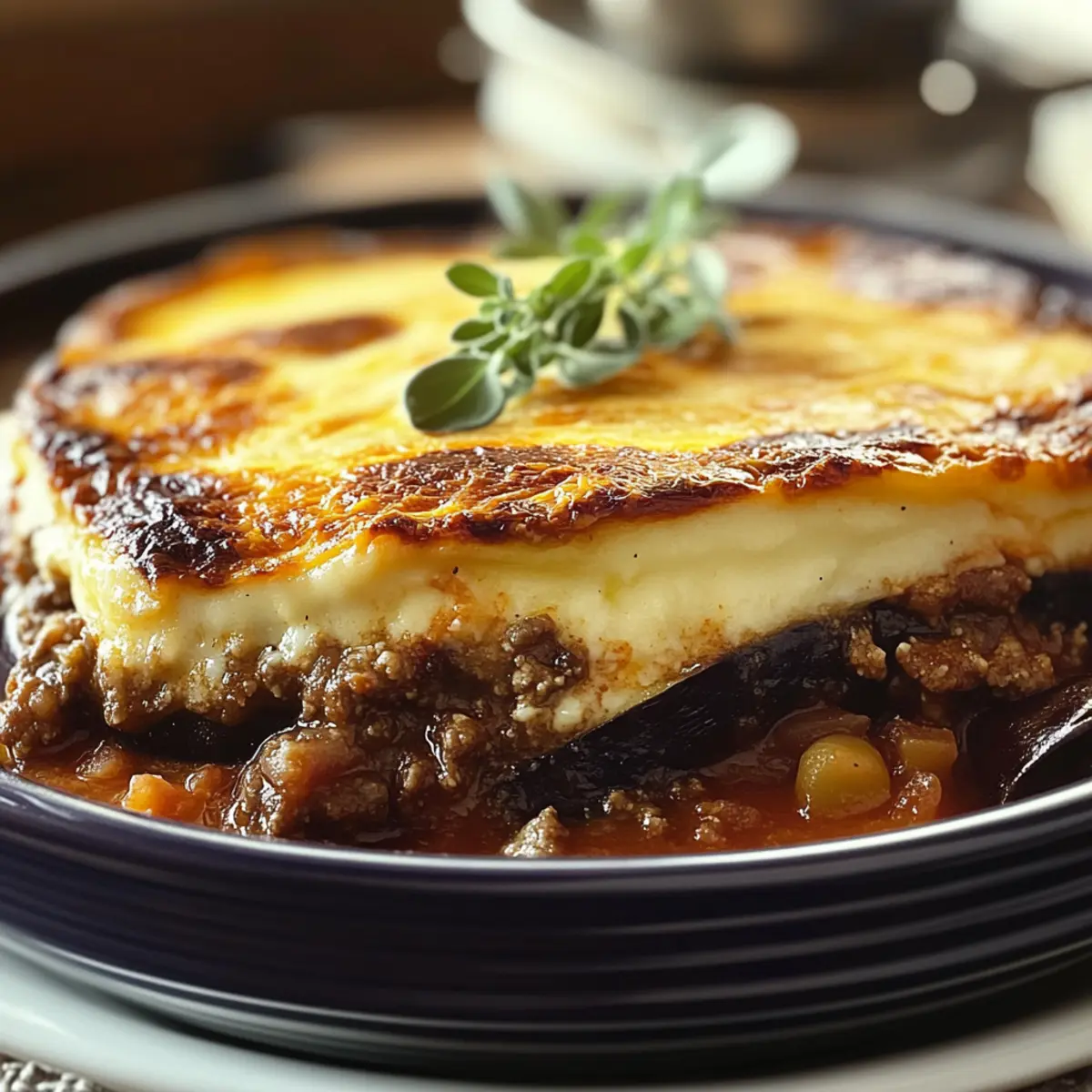
Why is Greek Moussaka so beloved?
Comfort Food Extraordinaire: Nothing beats the cozy vibes of homemade Greek moussaka! Hearty Layers: With its delightful combination of flavors and textures—think savory ground meat, tender veggies, and creamy béchamel—this dish will warm your heart. Versatile Options: Whether you choose beef or lamb, or mix in different cheeses to personalize your moussaka, the possibilities are endless! Crowd-Pleasing Delight: It’s perfect for family dinners or gatherings with friends, ensuring everyone leaves satisfied. Plus, if you love meal prep, you can easily make it ahead of time and store leftovers for a flavorful reheat. Treat yourself and your loved ones to a taste of the Mediterranean with this irresistible dish! For a healthier twist, try exploring Frozen Greek Yogurt or indulge in Greek Yogurt Cookie recipes for dessert.
Greek Moussaka Ingredients
Here’s everything you’ll need to create this delightful dish.
For the Vegetable Base
• Eggplants – Essential for the veggie base that absorbs flavors beautifully; choose firm, glossy ones for best results.
• Potatoes – Add heartiness and layers; make sure to slice them evenly for even cooking.
• Zucchini – Contributes a tender texture; you can substitute with summer squash if preferred.
For the Meat Sauce
• Ground Meat (Beef or Lamb) – Provides savory depth; lean meat is recommended for richness.
• Onion – Sweet red onions balance the dish; they provide a great aromatic base.
• Garlic – Fresh garlic adds warmth and flavor to the meat sauce; don’t skip this key ingredient!
• Crushed Tomatoes – Build a robust sauce; canned varieties work best for flavor and convenience.
• Red Wine – Adds richness and acidity, enhancing the overall flavor profile of the meat sauce.
• Spices (Cinnamon & Nutmeg) – Just a touch imparts essential Greek flavor—don’t skip!
• Herbs (Oregano, Thyme, Fresh Parsley) – Offer classic Mediterranean notes; fresh herbs are preferred for bold flavor.
For the Béchamel Sauce
• Butter – Forms the base of your béchamel, creating that decadent silkiness.
• Flour – Thickens the sauce; use all-purpose flour for best results.
• Milk – Provides creaminess; whole milk is recommended for richness.
• Egg Yolks – Adds richness to the béchamel; helps in achieving a velvety texture.
• Nutmeg – A pinch enhances the flavor profile, giving a nutty background.
• Cheese (Kefalograviera or Parmesan) – Forms a golden, flavorful crust; can substitute with Kasseri or Pecorino if unavailable.
By gathering these ingredients, you’ll be on your way to mastering an extraordinary Greek moussaka that resonates with the heartwarming essence of comfort food. Happy cooking!
Step‑by‑Step Instructions for Greek Moussaka
Step 1: Prepare Vegetables
Begin by slicing the eggplants, zucchini, and potatoes into ¼-inch rounds. To reduce the bitterness of the eggplants, sprinkle them with salt and let them sit for 30 minutes to draw out moisture. Once time’s up, pat the eggplant slices dry with paper towels to remove excess salt and moisture. This is essential for layering in your Greek moussaka.
Step 2: Fry Vegetables
In a large skillet, heat a generous amount of olive oil over medium heat. Working in batches, fry the sliced eggplants, zucchini, and potatoes until they are golden brown and tender, about 4-5 minutes per side. Drain the fried vegetables on paper towels to absorb any excess oil, ensuring they stay crispy. Set them aside while you move on to the meat sauce.
Step 3: Cook Meat Sauce
In the same skillet, sauté finely chopped onion and minced garlic over medium heat until the onion becomes soft and translucent, around 5 minutes. Next, add your choice of ground meat (beef or lamb) and cook until browned. Pour in a splash of red wine, allowing it to simmer until mostly evaporated, followed by crushed tomatoes and spices. Stir well and let it simmer for 10-15 minutes, blending the rich flavors.
Step 4: Make Béchamel
In a medium saucepan, melt butter over low heat and stir in flour to create a roux, cooking for about 2 minutes. Gradually whisk in warm milk, avoiding lumps, until the mixture thickens to a creamy consistency (approximately 5–7 minutes). Remove from heat and stir in egg yolks, nutmeg, and cheese, mixing until smooth. This silky béchamel is crucial for your Greek moussaka’s topping.
Step 5: Assemble Moussaka
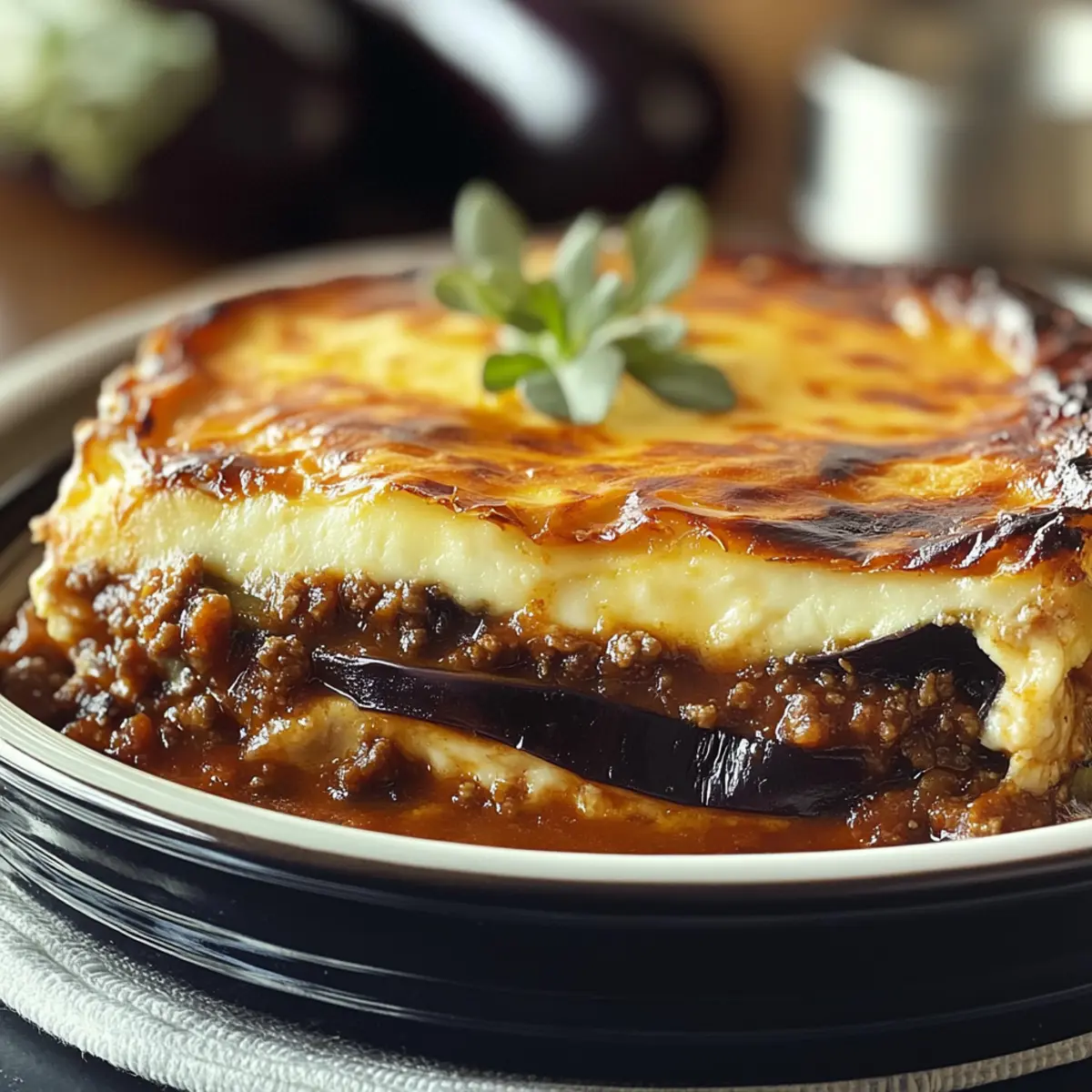
In a greased baking dish, start layering your Greek moussaka: first, add a layer of potatoes, followed by a layer of eggplants, then zucchini. Next, evenly spread a layer of the rich meat sauce over the vegetables. Top everything with a generous layer of béchamel sauce, then sprinkle cheese on top to create a beautiful, golden crust as it bakes.
Step 6: Bake
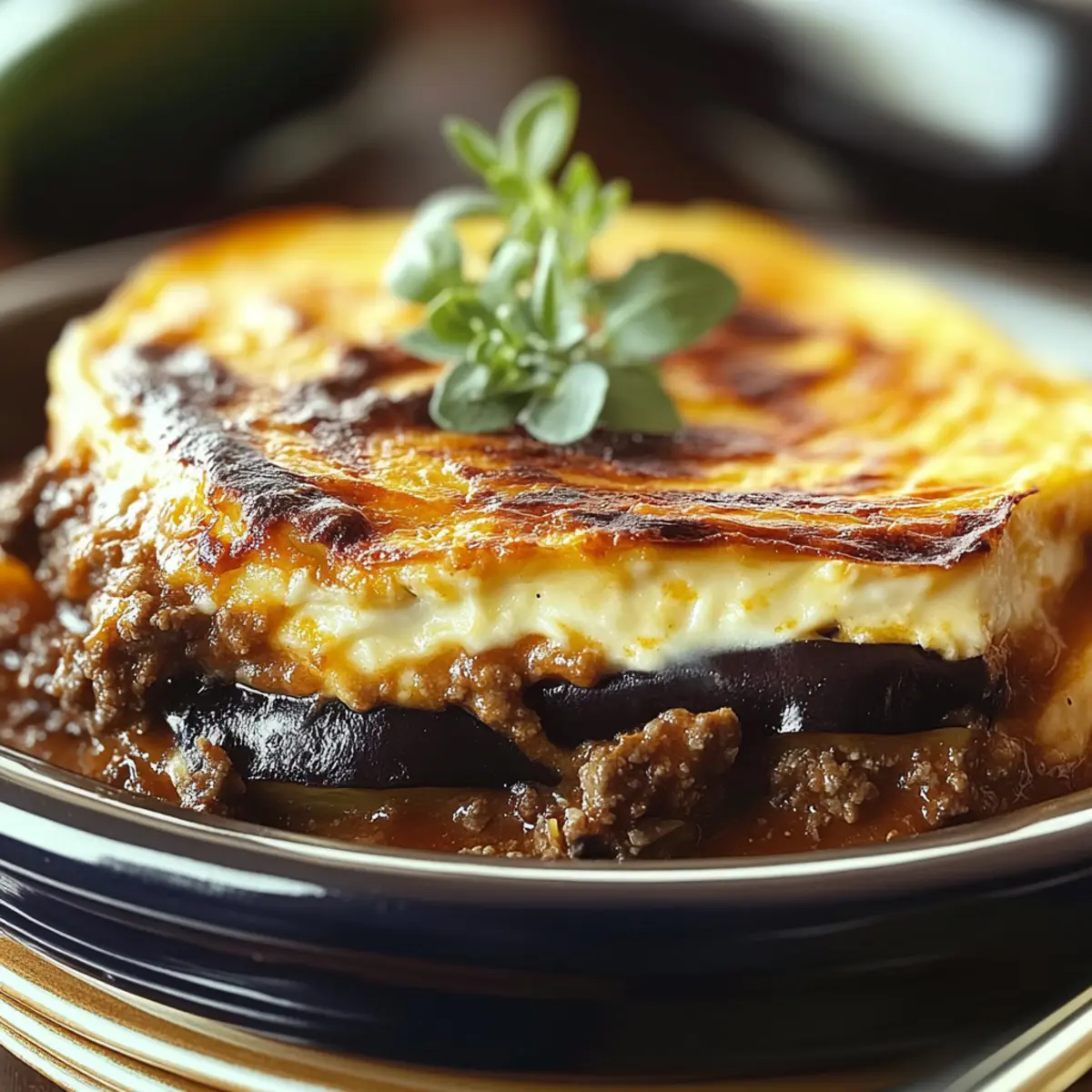
Preheat your oven to 165°C (330°F) fan-forced. Place the assembled moussaka in the oven and bake for 40-45 minutes, or until the top is bubbling and golden brown. As the aroma fills your kitchen, this Greek moussaka will transform into a stunning dish. Once baked, allow it to rest for 30 minutes to firm up before slicing and serving.
Expert Tips for Greek Moussaka
• Salt the Eggplant: Salting the eggplant helps draw out bitterness and moisture, making for a firmer texture. Don’t skip this step!
• Fry in Batches: Frying vegetables in batches ensures they brown evenly without steaming. This approach preserves their deliciousness and crunch!
• Béchamel Perfection: Stir constantly while making béchamel to avoid lumps. If you do get lumps, a quick strain can save your sauce!
• Assemble with Care: Layer the moussaka carefully, ensuring each layer is thick enough to hold its own. This helps create distinct layers of flavor in your Greek moussaka.
• Let it Rest: Let the baked moussaka rest for 30 minutes before serving; this helps the layers set, making it easier to cut without falling apart.
• Make-Ahead Magic: You can assemble the moussaka a day ahead and refrigerate it. Baking it just before serving ensures maximum flavor and freshness!
Make Ahead Options
These Greek Moussaka are perfect for meal prep enthusiasts! You can assemble the entire dish up to 24 hours in advance, which allows the flavors to meld beautifully overnight. Simply layer the potatoes, fried vegetables, meat sauce, and béchamel in your baking dish, but do not bake yet—cover tightly with plastic wrap and refrigerate. This method will keep everything fresh and delicious. When you’re ready to serve, preheat your oven and bake the moussaka for 40-45 minutes at 165°C (330°F) until it’s bubbly and golden. You’ll enjoy the time-saving benefits of having this comforting meal almost ready, making busy weeknights a breeze!
How to Store and Freeze Greek Moussaka
Fridge: Leftovers can be stored in an airtight container in the refrigerator for up to 3 days. This helps maintain the rich flavors and creamy texture of the moussaka.
Freezer: For longer storage, portion the moussaka in freezer-safe containers or wrap tightly in plastic wrap and aluminum foil. It can last up to 3 months in the freezer.
Reheating: To enjoy, thaw overnight in the fridge and reheat in the oven at 180°C (350°F) until warmed through, about 20-30 minutes. This retains the beloved béchamel crust.
Make-Ahead Tips: Greek moussaka can be assembled a day in advance and stored in the fridge, allowing the flavors to deepen overnight for an even more delicious meal!
What to Serve with Outrageously Delicious Greek Moussaka
Indulging in the rich, creamy layers of moussaka is only the beginning of your culinary journey; pairing it thoughtfully can elevate your meal.
-
Mediterranean Salad: A refreshing mixture of cucumbers, tomatoes, and olives brings a crisp contrast to the warm, hearty moussaka.
-
Garlic Bread: Soft, buttery garlic bread complements the dish’s richness while offering a satisfying crunch that enhances every bite.
-
Tzatziki Sauce: This cool, creamy yogurt dip brightens the meal with its tangy flavor, balancing the savory meat and béchamel perfectly.
-
Roasted Vegetables: Seasonal roasted vegetables provide a delightful sweetness and texture, enhancing your experience with fresh Mediterranean flavors.
-
Grilled Asparagus: Tender, lightly grilled asparagus adds a touch of elegance, with its unique flavor complementing the moussaka’s richness effortlessly.
-
Red Wine: A glass of fruity red wine, like a Chianti, enhances the flavors of both the meat and spices, making every bite truly memorable.
-
Baklava for Dessert: Finish the meal with this sweet pastry drizzled in honey—its layers echo the moussaka, bringing a sweet close to a comforting feast.
Greek Moussaka Variations
Feel free to explore delightful twists and adaptations of this Greek moussaka recipe to suit your tastes and dietary needs!
-
Cheese Substitution: Use ricotta mixed with milk for a lighter béchamel option. This will give you a creamy texture without being too heavy.
-
Meat Variations: Swap ground beef for lamb for an authentic Greek taste or mix different ground meats for variety. The blend of flavors will elevate your moussaka!
-
Dairy-Free: Opt for cashew cream blended with nutritional yeast as a tasty béchamel replacement. This creates a luscious and creamy layer that’s perfect for those avoiding dairy.
-
Veggie Delight: For a more plant-based option, replace meat with lentils or chickpeas seasoned with spices. This will not only enhance the texture but add a nutritious punch too.
-
Spice Adjustments: Experiment with adding smoked paprika or crushed red pepper for a spicy twist! This can give your moussaka an exciting kick that will keep everyone coming back for more.
-
Flavor Boost: Infuse your meat sauce with a bay leaf while it simmers, enhancing the depth of flavor throughout the dish. Trust me, it makes all the difference!
-
Heat Levels: Add diced jalapeños or a sprinkle of chili flakes for those who love a bit of heat. You can customize the spice level to suit your preference without overpowering the Mediterranean vibes.
-
Herb Swaps: Try using fresh basil or mint in place of oregano for a unique twist. The aromatic herbs can shift the flavor profile from traditional to unexpectedly refreshing!
If you’re looking for some sweet inspiration afterward, why not try your hand at Frozen Greek Yogurt or whip up some Greek Yogurt Cookies? Enjoy exploring all these exciting variations!
Greek Moussaka Recipe FAQs
What type of eggplants should I use for Greek Moussaka?
For the best results, choose firm and glossy eggplants with a smooth skin. This indicates freshness, and they’ll absorb the flavors beautifully during cooking. Avoid eggplants with dark spots all over, as they can be overripe and bitter.
How should I store leftover Greek Moussaka?
Leftovers can be stored in an airtight container in the refrigerator for up to 3 days. If you want to preserve the creamy béchamel crust, reheat it in the oven rather than the microwave for best results.
Can I freeze Greek Moussaka?
Absolutely! If you want to freeze your moussaka, let it cool completely, then cut it into portions. Place the pieces in freezer-safe containers or wrap tightly with plastic wrap and aluminum foil. It will stay fresh for up to 3 months. To reheat, thaw overnight in the fridge and bake at 180°C (350°F) until warmed through, about 20-30 minutes.
What if the béchamel sauce has lumps during preparation?
If your béchamel sauce develops lumps, don’t worry! Simply strain the sauce through a fine-mesh sieve to remove any lumps. To avoid this in the first place, make sure to whisk the milk in slowly while continuously stirring to create a smooth consistency.
Is Greek Moussaka safe for pets?
While Greek moussaka is delicious for humans, it’s not suitable for pets, especially due to the presence of garlic and certain spices. If you’re looking for pet-friendly recipes, focus on plain, cooked meats and vegetables without seasoning.
What can I substitute for the cheese in the béchamel?
If you don’t have Kefalograviera or Parmesan on hand, you can substitute with Kasseri for a similar flavor, or even Pecorino. For a lighter option, consider mixing ricotta with a bit of milk to create a different, yet still creamy, topping!
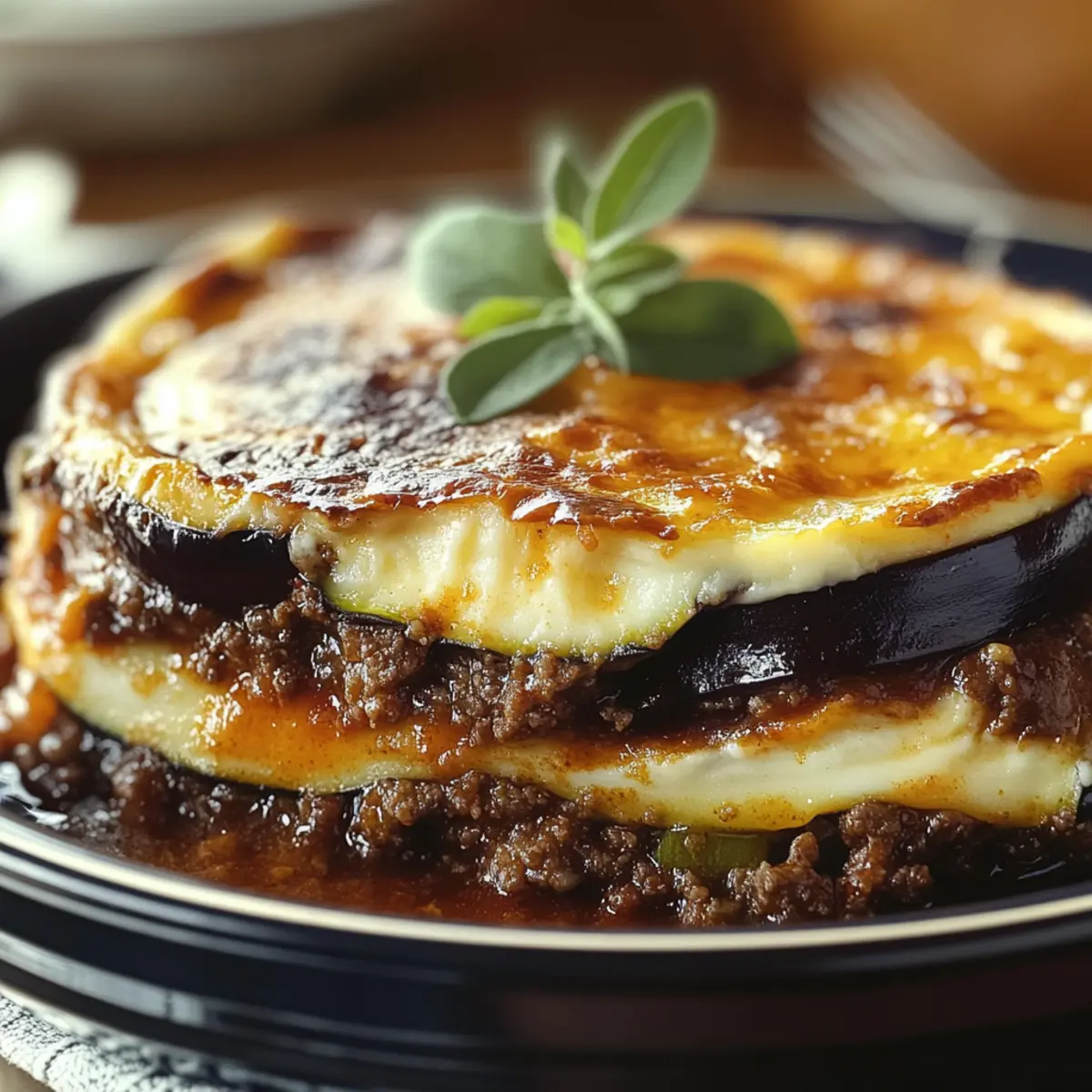
Irresistible Greek Moussaka for Cozy Family Dinners
Ingredients
Equipment
Method
- Begin by slicing the eggplants, zucchini, and potatoes into ¼-inch rounds. Sprinkle eggplants with salt and let sit for 30 minutes.
- Heat olive oil in a large skillet over medium heat. Fry the sliced eggplants, zucchini, and potatoes until golden brown, about 4-5 minutes per side.
- In the same skillet, sauté onion and garlic until soft. Add ground meat and cook until browned. Pour in red wine and simmer until evaporated. Stir in crushed tomatoes and spices, then let it simmer for 10-15 minutes.
- Melt butter in a saucepan, stir in flour to create a roux, then whisk in milk until thickened. Remove from heat, stir in egg yolks, nutmeg, and cheese until smooth.
- In a greased baking dish, layer potatoes, then eggplants, then zucchini. Spread meat sauce over vegetables and top with béchamel sauce and cheese.
- Preheat oven to 165°C (330°F). Bake for 40-45 minutes until the top is golden brown. Allow to rest for 30 minutes before serving.
Leave a Reply